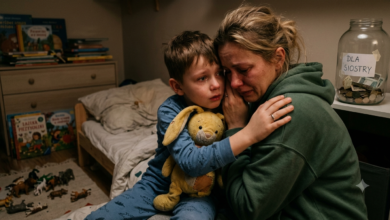
MY PARENTS LEFT MY CHILDREN IN THE COLD AFTER OUR HOUSE BURNED—THEN GRANDMA ARRIVED WITH THE DEED
PART 3
The name printed on the deed was:
Eleanor Whitmore.
My grandmother.

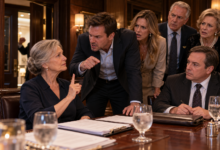
I looked from the document to my father.
“You don’t own this house?”
His jaw tightened.
“Mother has always been dramatic about paperwork.”
Grandma gave a humorless laugh.
“Paperwork?”
She removed another document from the folder.
“I bought this house thirty-two years ago when you lost yours in bankruptcy.”
My mother went white.
Vanessa stared at Dad.
“You told us Grandpa left you this house.”
Dad snapped, “This has nothing to do with you.”
“It has everything to do with us,” Grandma replied.
Her voice wasn’t loud.
That somehow made it worse.
She explained that when my parents nearly lost everything decades earlier, she had purchased the property and allowed them to live there indefinitely.
No rent.
No mortgage.
Only property taxes and maintenance.
There had been one written condition.
The home could remain theirs to use as long as Grandma believed it was being used as a family home rather than an asset to exclude or exploit other family members in genuine need.
Dad scoffed.
“You’re going to throw us out because Claire had one bad night?”
Grandma looked toward the minivan.
“One bad night?”
Mason was still inside, holding his damaged dinosaur.
Ellie had finally fallen asleep.
Grandma pointed toward them.
“Those children watched their house burn down. Then they sat ten feet from four empty bedrooms because you thought a baby shower mattered more.”
Mom started crying.
“We had plans.”
Grandma’s expression hardened.
“So did Claire.”
That silenced everyone.
“She planned to put her children to bed in their own rooms last night.”
My throat tightened.
I looked away.
Vanessa finally spoke.
“I didn’t know.”
No one answered her.
She looked at Mom.
“You told me Claire decided not to stay here.”
My mother froze.
That changed everything.
Vanessa’s face crumpled.
“You told me the kids were staying with friends.”
Mom whispered, “I didn’t want you upset before your shower.”
Vanessa stared at her as if seeing her for the first time.
“So you left them outside because of me?”
“It wasn’t like that.”
“It was exactly like that.”
Vanessa stepped off the porch.
For years, she had been the center of our family.
The beautiful daughter.
The successful one.
The one everyone protected from discomfort.
And I had resented her for it.
But standing there in the gray morning, one hand on her stomach, she looked horrified rather than entitled.
She walked toward my van.
Mason immediately stiffened.
That nearly broke me.
Vanessa crouched beside his window.
“Mason?”
He didn’t answer.
“I’m really sorry.”
He looked at her for a long time.
Then he asked, “Did you need Grandma’s room because you’re having a baby?”
Vanessa closed her eyes.
“No, sweetheart.”
“My grandma said we couldn’t go inside because of the baby.”
“No.”
Her voice cracked.
“I never asked for that.”
My mother began to say something, but Vanessa turned around.
“Don’t.”
It was the first time I had ever heard her speak to Mom that way.
Brad quietly placed the baby shower gift bags on the driveway.
Then he walked over to me.
“You and the kids are coming home with us.”
I blinked.
“What?”
“We have room.”
Vanessa nodded.
“Five bedrooms.”
For the first time, I almost laughed.
The absurdity of it hurt.
“You don’t have to.”
“Yes,” Vanessa said. “We do.”
My father interrupted.
“This performance has gone far enough.”
Grandma turned back to him.
“No. It has gone on for thirty years.”
She opened the folder again.
Inside was a formal notice.
Dad’s confidence vanished.
Grandma had already signed paperwork ending their right to occupy the house.
She wasn’t throwing them onto the street that morning. They had sixty days.
But they were leaving.
Mom gasped.
“You can’t be serious.”
“I have never been more serious.”
Dad looked at me.
And suddenly I saw it coming.
The blame.
“This is what you wanted, isn’t it?”
I shook my head.
“I didn’t even know Grandma owned the house.”
“You always hated your sister.”
Vanessa stepped between us.
“No, Dad.”
He stared at her.
She swallowed.
“Claire didn’t do this.”
Then she looked toward the van.
“You did.”
For once, nobody rushed to protect him from that sentence.
Grandma picked up the deed.
Then she came to me.
“I could put the house in your name.”
My parents both reacted at once.
I didn’t.
I just stared at her.
She continued.
“I could transfer it to you, sell it, or keep it.”
“Grandma…”
“But I want you to decide after you’ve slept.”
I looked toward the house.
For years, I had associated that place with rejection.
Christmases when Vanessa’s gifts were bigger.
Birthdays when mine were forgotten.
College graduation, when Dad left early because Vanessa had a headache.
And now this.
I shook my head.
“I don’t want it.”
Dad almost smiled.
Then I finished.
“But I don’t think they should stay either.”
His smile disappeared.
Grandma nodded slowly.
“That was my thought.”
Three months later, she sold the house.
Not to me.
Not to Vanessa.
She sold it to a young couple with three children.
Then she divided part of the proceeds into education trusts for every great-grandchild—Mason, Ellie, and Vanessa’s baby.
The rest went into a small family emergency fund controlled by Grandma herself.
Her rule was simple:
If someone in the family was in genuine crisis, help came before pride, parties, or appearances.
My parents moved into a condo across town.
For several months, we barely spoke.
My father blamed me.
My mother blamed Grandma.
But without the big house, the elaborate gatherings, and the illusion of being the center of the family, something changed.
They had to sit with what they had done.
Mom called first.
Not to excuse herself.
For once, she didn’t say, “You know how your father is,” or “We were under stress.”
She simply said:
“I heard Ellie ask if she was bad, and I still closed the door.”
I said nothing.
She cried.
“I don’t know how to forgive myself for that.”
I answered carefully.
“Then don’t start with forgiveness. Start by becoming someone she feels safe around.”
It took time.
There were no magical family dinners.
No instant reconciliation.
My parents went to counseling.
Dad resisted for months before finally joining.
Vanessa changed too.
She stopped allowing Mom to use her as the excuse for every family decision.
When her daughter was born, she asked me to be in the delivery room.
We cried more than the baby did.
As for our house, insurance eventually covered most of the rebuild.
But we never rebuilt it exactly the same.
Ryan and I made one deliberate change.
We added a larger guest room.
Mason asked why.
I told him:
“So if someone we love ever needs a safe place, we won’t have to think twice.”
A year after the fire, Grandma came for dinner.
Mason’s stuffed dinosaur sat on a shelf in his new bedroom.
One side was permanently melted.
I once offered to replace it.
He refused.
“That one survived,” he said.
After dessert, I found him sitting beside Grandma on the porch.
He asked her something I will never forget.
“Why did you come when Mommy texted you?”
Grandma smiled.
“Because when someone tells you they’ve been locked out in the cold, you don’t ask whether it’s convenient.”
She squeezed his hand.
“You open the door.”
Mason thought about that.
Then he nodded.
And I realized that was the real inheritance Grandma gave us.
Not a house.
Not money.
Not revenge.
A rule.
One my children would grow up knowing:
Family is not the people who have the most rooms.
Family is the people who make room for you when your world is burning.