She Vanished From a Park at Age 4. Fifteen Years Later, Police Found Her DNA in a Locked File—And Discovered She Had Been Living Under Another Name
PART 3 — THE GIRL WITH TWO NAMES
Elena stopped immediately.
She had imagined this moment thousands of times.
Lucía running toward her.
Lucía crying “Mom.”
Lucía recognizing her voice.


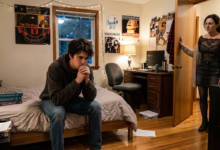

Instead, a nineteen-year-old stranger stood across the room, trembling.
So Elena did the hardest thing she had ever done.
She did not hug her.
She did not reach for her.
She simply said:
“Okay.”
Martina looked surprised.
Elena wiped her face.
“I don’t expect you to remember me. I don’t expect you to love me because a DNA test says you should.”
Her voice cracked.
“I only needed you to know that you were loved before you disappeared. And you were loved every single day afterward.”
Martina covered her mouth.
For the first time, she cried.
Not like a child finding her mother.
Like someone watching two different lives collide inside her.
Over the next several days, the investigation became even more painful.
Roberto and Pilar Campos, the couple who had raised Martina, insisted they had never known she had been kidnapped.
They admitted paying €100,000.
They admitted the adoption had been “private.”
They admitted Dr. Ortiz had told them paperwork would be handled discreetly because “the biological mother had changed her mind after signing.”
But they claimed they believed the arrangement was legally gray—not criminal.
Martina screamed at them.
“You paid for me?”
Pilar collapsed into tears.
“We thought we were paying fees.”
“One hundred thousand euros?”
“We were desperate.”
Martina stared at the woman she had called Mom for eighteen years.
“That doesn’t answer me.”
Roberto finally said what Pilar couldn’t.
“We didn’t ask enough questions.”
Silence filled the room.
And in that silence, Martina understood something terrible.
Her parents may not have ordered a kidnapping.
But they had wanted a child badly enough not to look closely at where she came from.
Then Inspector Vidal uncovered the part nobody expected.
Lucía had not been randomly selected.
Someone had watched Elena.
Phone records led investigators back to a former clinic employee named Beatriz Salgado, who had known Dr. Ortiz for years.
Beatriz had also been one of the women helping search the park on the day Lucía vanished.
When police brought her in, she denied everything.
Until Carmen placed a photograph on the table.
It showed Beatriz near the park entrance that afternoon.
Beside her stood another woman tied to Ortiz’s network.
Beatriz went white.
“You don’t understand.”
“Then explain it.”
Beatriz began crying.
She said Ortiz had paid people to identify vulnerable situations.
Babies were easier.
But sometimes wealthy prospective parents requested older children.
Children with no serious medical conditions.
Children young enough to adapt.
Children whose disappearance could be staged as a stranger abduction.
Lucía had been chosen because Elena followed the same park routine several days a week.
Someone had studied her.
Waited.
And on September 17, 2008, Beatriz distracted Elena while another woman led Lucía away.
Elena nearly lunged across the interview room when she heard that.
“You spoke to me.”
Beatriz looked down.
“You asked me if I’d seen her.”
“I know.”
“You helped me search.”
“I know.”
Elena’s voice dropped to a whisper.
“You watched me scream my daughter’s name while you knew where she was.”
Beatriz had no answer.
That silence destroyed whatever sympathy remained.
Her testimony led police to additional members of the network.
Records were seized.
Accounts were frozen.
Former medical workers began naming names.
Dr. Carmela Ortiz’s organization collapsed completely.
But justice didn’t repair what had happened inside Martina.
She stopped attending classes.
She ignored calls from both families.
She covered the mirrors in her bedroom because, she later admitted, she no longer knew whose face she saw.
Pilar begged to see her.
Elena refused to pressure her.
That difference mattered.
One evening, Martina finally called Elena.
“Can we meet?”
They chose a café.
Not Elena’s house.
Not the Campos home.
Neutral ground.
For an hour, they talked about ordinary things.
Nursing school.
Coffee.
Music.
Then Martina asked:
“What was I like?”
Elena smiled painfully.
“You hated bananas.”
Martina blinked.
“I still hate bananas.”
They both laughed.
Then both started crying.
Elena told her about the yellow raincoat she refused to remove indoors.
About the stuffed rabbit named Señor Nube.
About the way she mispronounced mariposa.
Martina listened without interrupting.
Finally she whispered:
“I don’t remember any of that.”
“I know.”
“Does that hurt you?”
“Yes.”
Elena could have lied.
She didn’t.
“It hurts more than I can explain.”
Martina looked down.
“But I don’t want my pain to become your obligation.”
That sentence changed everything.
Weeks later, Martina met Javier, her biological father.
The reunion was quieter.
He had spent years blaming himself for not being at the park that day.
He brought no gifts.
Only a small photograph.
Lucía asleep on his chest at age two.
Martina stared at it for a long time.
Then said:
“You look happy.”
“I was.”
“Were you happy after?”
Javier shook his head.
“No.”
It wasn’t dramatic.
That made it worse.
Eventually Martina agreed to see Roberto and Pilar again.
Pilar immediately tried to apologize.
Martina stopped her.
“I love you.”
Pilar sobbed.
Martina continued.
“But loving you doesn’t erase what you did.”
Roberto lowered his head.
“I know.”
“You should’ve asked where I came from.”
“I know.”
“You should’ve protected the child you were trying to adopt before she was even yours.”
That sentence broke him.
Martina did not cut them out of her life.
But she changed the relationship.
Trust would no longer be automatic.
It would have to be rebuilt.
Slowly.
Honestly.
Meanwhile, Elena faced a truth she had never imagined.
Finding Lucía did not return the four-year-old girl she’d lost.
That child was gone.
In her place was Martina.
A young woman who loved two sets of parents.
Who carried two histories.
Who belonged completely to neither and, eventually, to herself.
Months later, she made her legal decision.
She restored her birth identity:
Lucía Herrera.
But she kept Martina as part of her name.
Lucía Martina Herrera.
When reporters asked why, she gave a simple answer.
“Lucía is the child who was taken.”
“Martina is the person who survived.”
“I won’t kill one of them to prove the other existed.”
Elena watched the interview from home and cried harder than she had on the day they reunited.
Not from grief.
From pride.
The final twist came nearly a year later.
Elena was cleaning boxes she had preserved from Lucía’s childhood.
Inside one was Señor Nube.
The stuffed rabbit.
Its fur was gray now.
One ear nearly detached.
Elena hesitated before giving it to Martina.
“I don’t know if this means anything to you.”
Martina took it.
For several seconds, nothing happened.
Then she touched the rabbit’s left ear.
Her expression changed.
“There was something inside.”
Elena froze.
“What?”
“I don’t know.”
Martina squeezed the ear.
A tiny plastic bead shifted beneath the fabric.
She began crying before Elena understood why.
“I remember this.”
It wasn’t a full memory.
Not the park.
Not the kidnapping.
Not Elena’s face.
Just a little girl lying in bed, pressing the bead inside the rabbit’s ear whenever she was scared.
Elena sat beside her.
“That’s enough.”
Martina shook her head through tears.
“No.”
Then she finally leaned into Elena’s arms.
Not because DNA told her to.
Not because the police had reunited them.
Because for the first time, something inside her had reached backward through fifteen missing years and found home.
Elena held her carefully.
Like she had waited her entire life for that exact second.
And this time, Martina didn’t ask her to stop calling her Lucía.
She whispered:
“Mom… tell me about the yellow raincoat again.”
For Elena, that was the moment the search finally ended.
Not when DNA matched.
Not when arrests were made.
Not when the truth reached the newspapers.
It ended in a quiet room, with an old stuffed rabbit between them, while a daughter with two names began choosing for herself which pieces of both lives she wanted to keep.
And nobody ever asked her again which family was her “real” family.
Because eventually they understood.
Love was not a contest.
Truth did not erase eighteen years of memory.
And biology did not erase the people who raised her.
What mattered was that the crime no longer got to decide who she was.
Lucía Martina Herrera would decide that for herself.